Blog
Latest posts
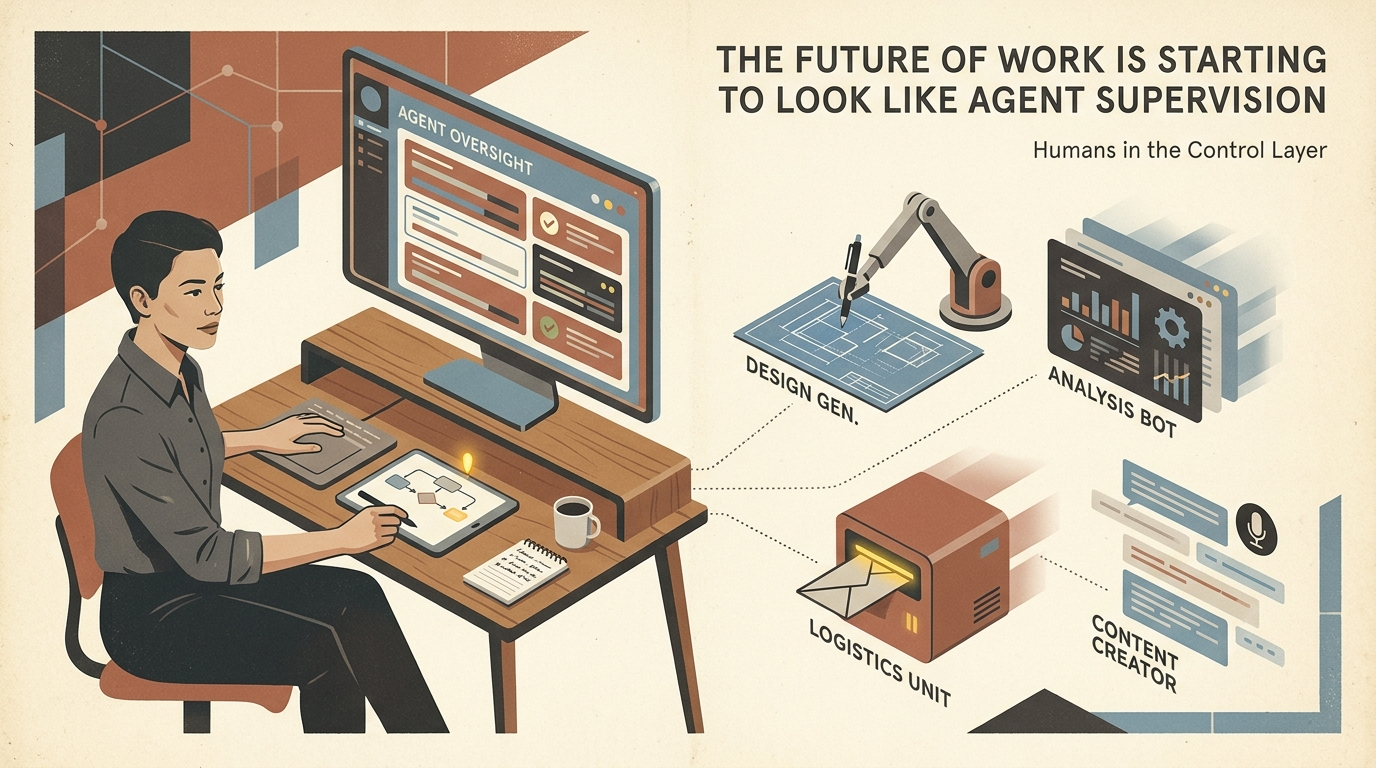
The Future of Work Is Starting to Look Like Agent Supervision
AI is not just adding smarter tools to the stack. It is turning more jobs into a mix of direction-setting, review, context management, and controlled delegation.

Insurance Just Became an Interface
The most interesting thing happening in insurance right now is not another chatbot. It is the slow, very real conversion of the industry into software that agents can actually operate.

Space Is Quietly Becoming an AI Business
The next big software market may be floating 500 kilometers above your head.

The First Jobs AI Assistants Change Won’t Be the Ones You Expect
A new wave of agentic tools is turning routine knowledge work into background automation, and the people who adapt fastest will move from doing the flow to directing it.

AI’s New Nervous System Arrived This Week
The most important AI releases of the past few days were all about connective tissue: the infrastructure that lets agents carry context, move across surfaces, and operate inside real companies.

The Best AI Coding Teams Won’t Win by Typing Faster
The real advantage now is operational: who can direct, review, and ship with agents woven into the software loop.

The Next Org Chart Has Agents on It
A new company architecture is coming into focus: software handles coordination, AI factories supply the horsepower, and autonomous machines start taking work into the street.

Upriver’s Real Idea Is Bigger Than AI Pipelines
The serious play in agentic data engineering is not faster code generation. It is building enough context, validation, and upstream ownership that agents can operate on live data without turning your platform into a roulette wheel.
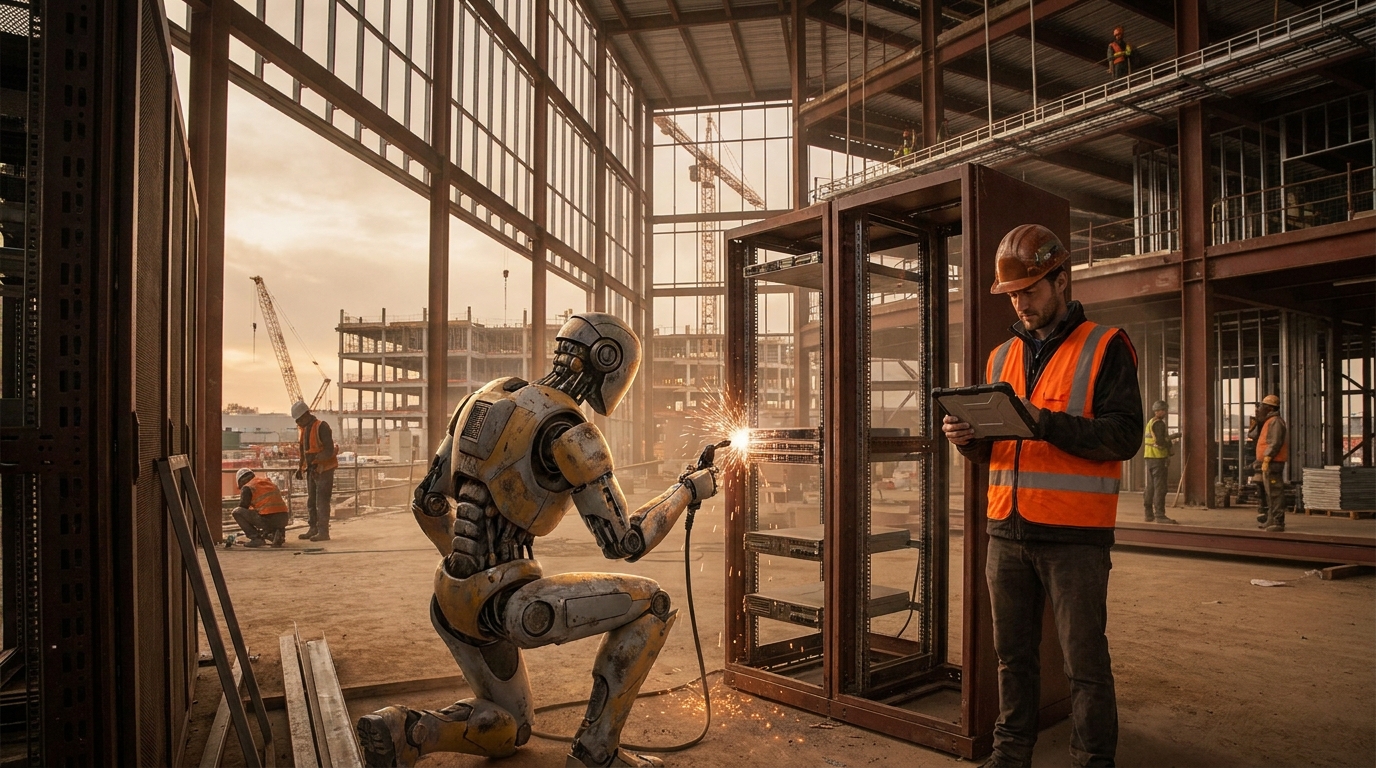
The Robots Are Already Building the Invisible Future
When SoftBank quietly starts a robotics company to build data centers, and immediately shoots for a $100 billion IPO valuation, you stop asking if this trend is real and start asking how quickly the rest of the economy gets rebuilt around it.

Three-Quarters of Google's New Code Is AI-Generated. That's Not the Interesting Part.
Sundar Pichai dropped a number that should have broken the internet and somehow didn't: 75% of all new code at Google is now AI-generated. But the real story isn't the percentage. It's what happened next.
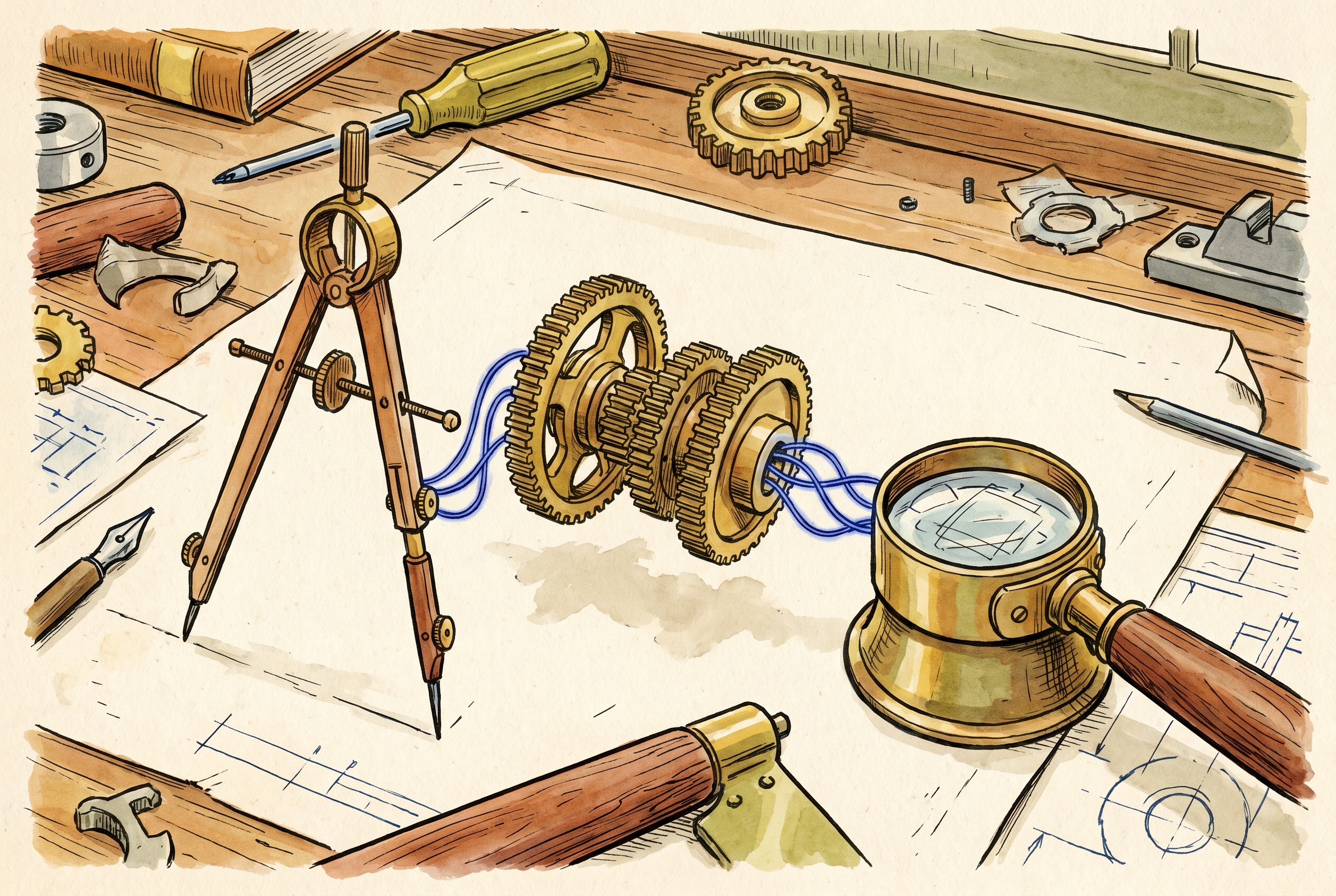
The AI Coding Stack Is Composing Itself
How Cursor, Claude Code, and Codex accidentally became the layers of a composable engineering pipeline — and why multi-agent swarms are the real step-change
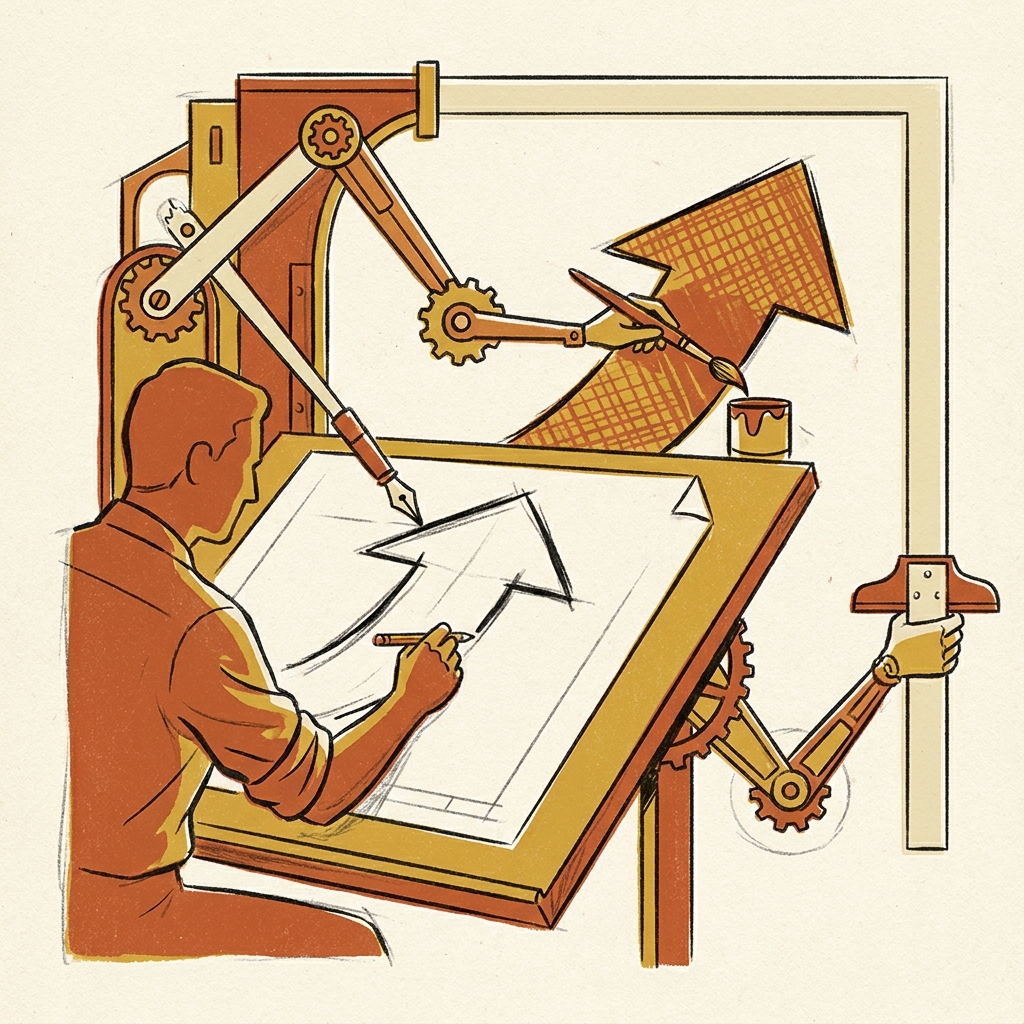
The Third Seismic Shift: Why Agentic Coding Is Rewriting Software Engineering
Autonomous AI agents are no longer assisting developers — they're starting to manage entire projects. The question isn't whether this changes everything, but how fast.

We Broke the Code Assembly Line — and Nobody's Quite Sure What Comes Next
AI didn't just speed up software development. It flooded it. Now the industry is scrambling to figure out what to do when the machines ship ten times more code than any team can review.

Agentic Engineering Just Grew Up — And It Brought Receipts
How coding agents went from autocomplete party tricks to the most contested infrastructure in software, and why the real story is about who controls the loop.

Work After Clicking
The next productivity leap belongs to people who can choreograph agents, not just operate software.

AGI Already Here (Functional, Quiet, and Mostly Unsaid)
Silicon Valley is having a quiet revelation. Not a public manifesto, not grand proclamations — just private conversations, late-night DMs, and the occasional blunt sentence at a dinner table.

The Cognitive Mirror and the Silence About Already-Here AGI
The sharpest minds in Silicon Valley are quietly admitting something unsettling: the system they talk to every day already behaves like general intelligence, and the debate over definitions is starting to feel beside the point.
Data Agents Are Becoming the Analytics Layer
The shift is not from dashboards to chat. It is from generic data access to agents grounded in memory, workflow, validation, and trust.
The IDE Is Becoming a Control Plane
OpenAI, GitHub, and Microsoft are converging on the same future: software engineers will spend less time typing code and more time directing persistent, parallel machine labor.

Agentic AI and the Next Intelligence Explosion, Without the Singularity Myth
Why a new paper from Benjamin Bratton and Blaise Agüera y Arcas is really an argument for institutions, not just smarter models

The Chat Window Was Only the Beginning
The most interesting AI use cases of 2026 are showing up in ordinary places—TVs, inboxes, music tools, and warehouses that suddenly behave like collaborators.

The Future of Work Is Hiring Invisible Teammates
AI is slipping out of the chatbot tab and into the operating core of real companies, where it behaves less like software and more like a fast, strange new colleague.

When Software Stops Asking You to Tap
A new interaction model is arriving fast: less hunting through apps, more stating intent and supervising the result.

The Next Interface Won’t Live in a Tab
Why this week’s AI launches make one thing obvious: software is leaving the dashboard era and becoming an ambient, action-taking layer around daily life.

The Chat Window Is the New Insurance Agency
Insurance is not being “digitally transformed.” It is being conversationally invaded — and the winners will be the carriers whose underwriting can survive a sentence, not a portal.

The Screen Is Becoming a Checkpoint
AI is not just changing what software can say. It is changing when humans need to touch software at all.

The Agentic Delivery Blueprint
How to build an autonomous delivery team that ships real work without drowning in orchestration, hallucinated progress, or fragile handoffs.
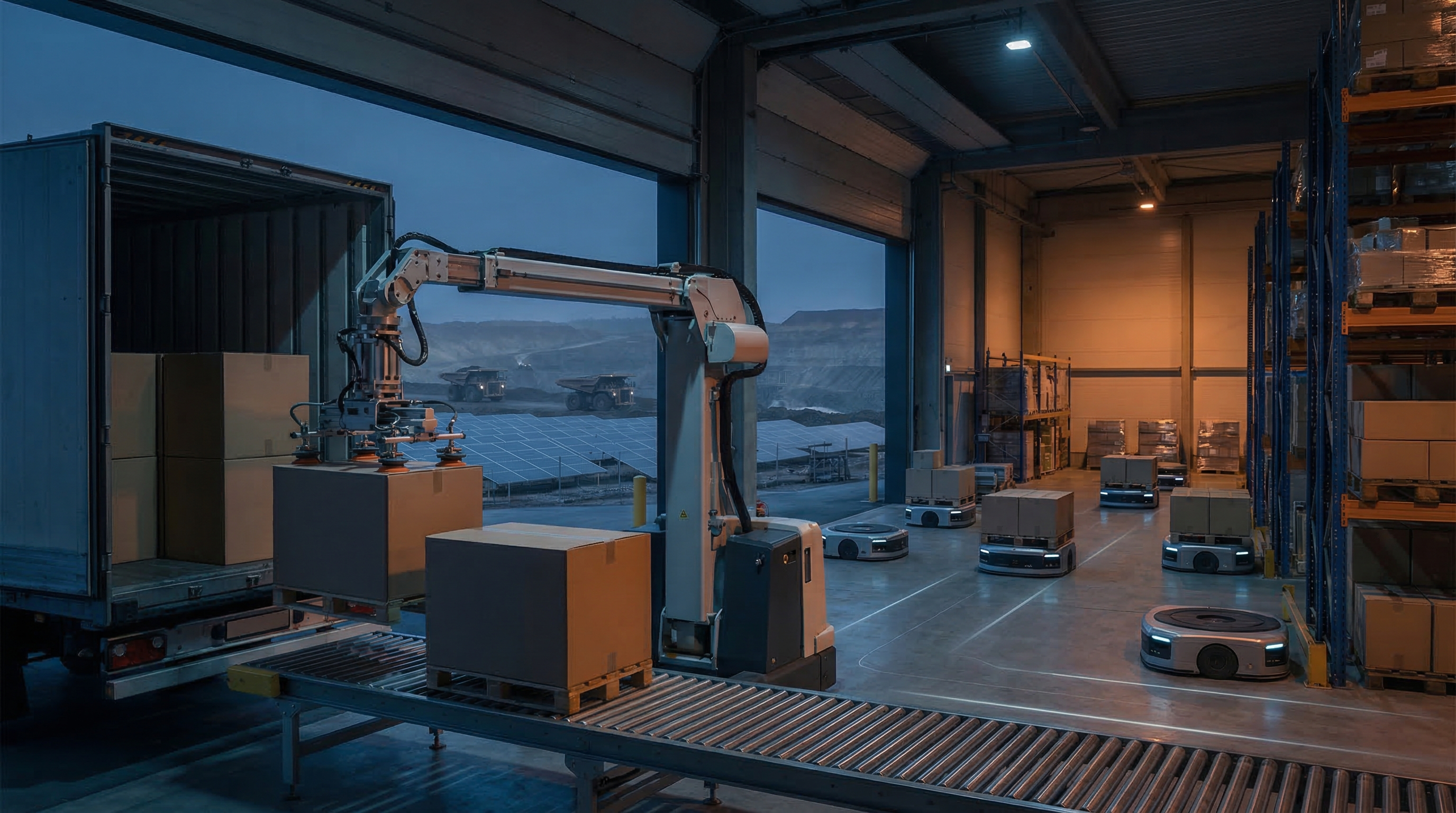
Physical AI Leaves the Demo Stage
The next important AI companies may be built in mines, fields, warehouses, weld cells, and solar sites rather than on chat interfaces.

The Industry That Wakes Up Different
In insurance, AI is no longer the shiny thing at the edge of the business. It is starting to become the operating layer in the middle of it.

The Browser Is Becoming a Staff Role
The next interface shift is not another app icon. It is software that sees the page you see, understands the task you are in, and starts doing the first half of the job for you.
The Office Is Becoming an AI Control Room
This week’s launches and layoffs suggest the future of work won’t look like mass replacement so much as constant orchestration.
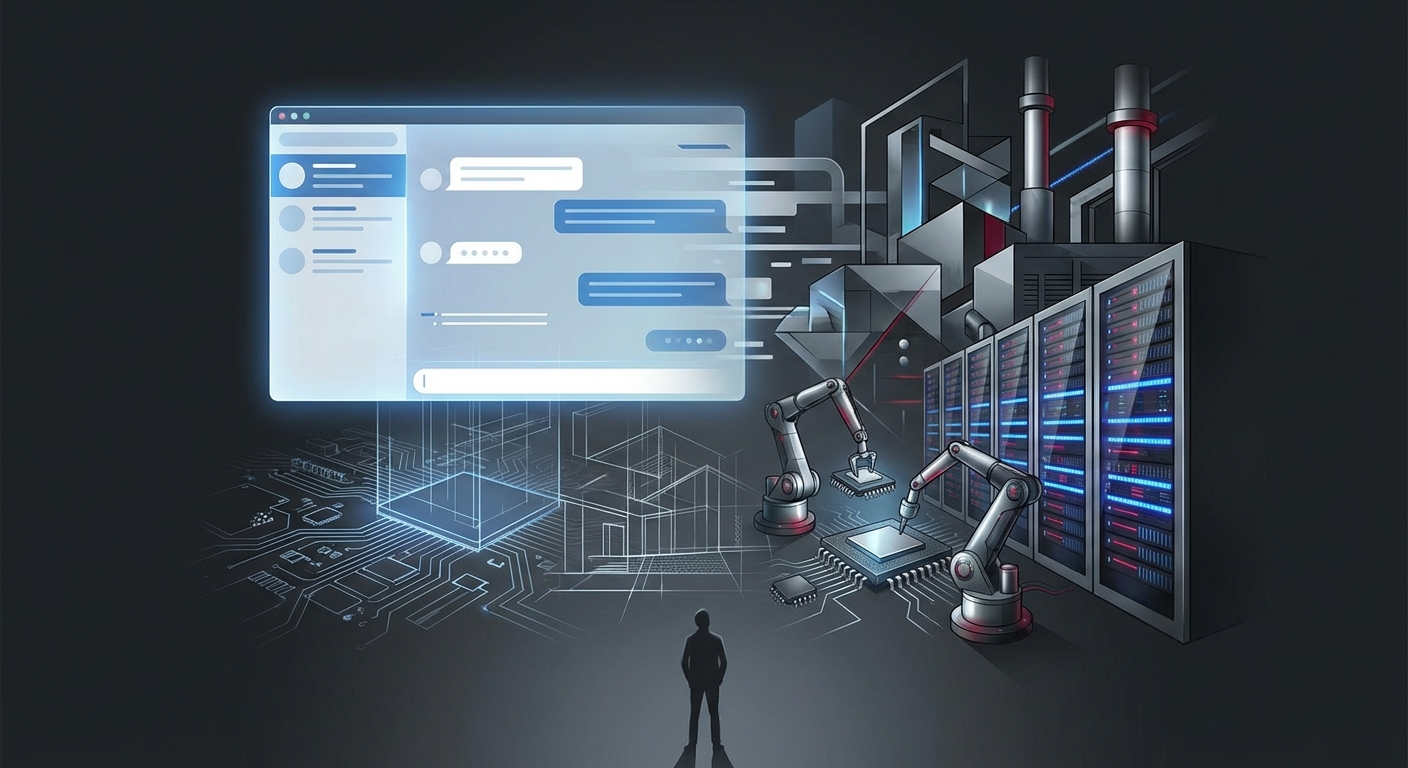
The Week AI Became Infrastructure
The most important launches of the past few days were not just smarter models. They were signs that AI is slipping out of the chat window and into the machinery of how products, chips and entire companies get built.

From Chat to Ambient: the interface war after the AI breakthrough
The next platform shift isn’t a smarter model. It’s a quieter one—embedded in lenses, OS features, and workflows that stop asking you to “prompt.”
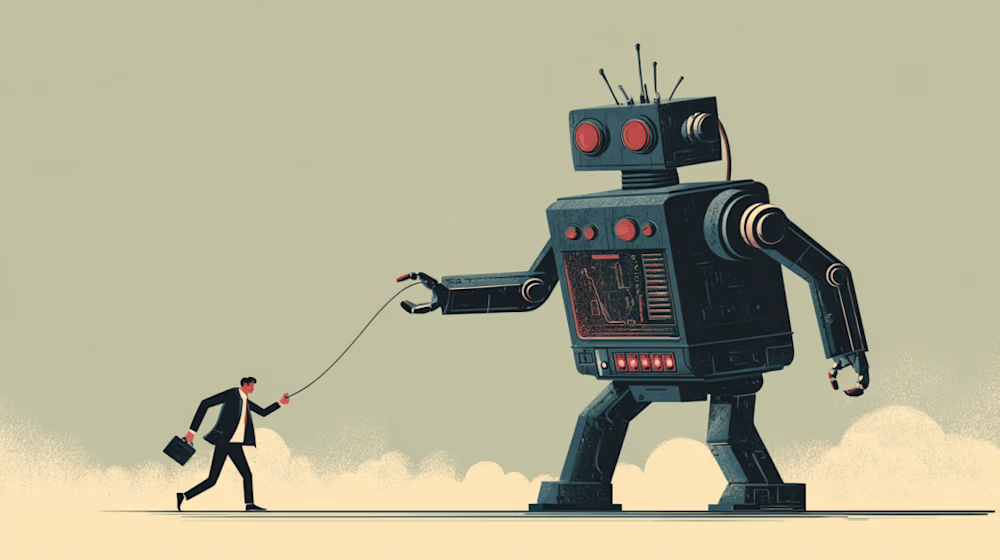
The Post-UI Era: When Enterprise Software Stops Serving Humans and Starts Running Work
"Click here. Fill that out. Approve this. Export that. Repeat until retirement." That model is ending. Not because humans suddenly got better at process design, but because software is gaining a new “user” entirely: a digital workforce that does not need dashboards, training videos, or polite reminders.

Your Enterprise Is Missing The AI Train
The software ecosystem is in a phase change, and it’s happening at roughly 10x the speed of the cloud revolution. In 39 months, AI coding agents went from solving about 2% of real-world software engineering tasks to 80%+ on real GitHub issues. 2025 already saw roughly 41% of code being AI-generated or AI-assisted globally, and 2026 is projected to push that past 50%.